
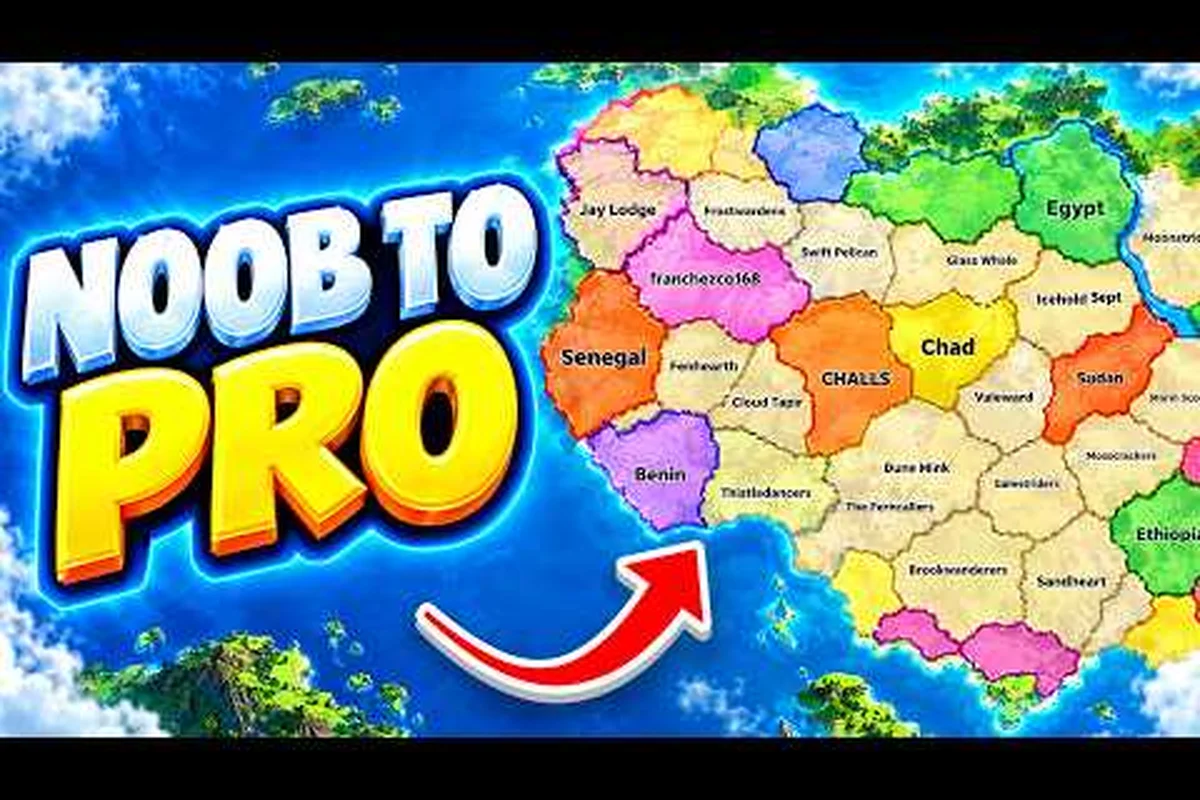
Deciding rofront what to do first is the difference between a stable opening and a wasted start. This guide gives new commanders a practical early-game priority plan: claim a safe area with a limited troop group, protect the starting army, build a compact city-and-factory economy, and expand only when each new border can be defended. Use the match-wide priority checklist to avoid the most common early mistakes, from attacking without a recovery plan to expanding too thin or overextending into territory you cannot connect, and learn how that first safe claim turns into momentum for the mid-game economy.
RoFront What to Do First: An Early-Game Priority Plan
RoFront what to do first comes down to three decisions: claim safe land, protect your army, and build a dependable economy. Following that order helps you avoid wasting troops on a rushed fight while giving your cities and factories room to grow.
Choose a Safe Starting Position
Your first move should not be an attack. It should be a search for low-risk expansion that gives your economy room to operate. The official RoFront game page describes a shared world where nations expand from one starting point, build cities, ports, and factories, and eventually contest territory. Your opening position determines how comfortably you can follow that loop.
Start by locating a direction that offers a mixture of nearby unclaimed land and defensible space. A crowded border may appear attractive because it contains cities or useful infrastructure, but it can also pull you into a conflict before your troop production is ready. A remote corner may lack immediate targets, yet it often gives you time to establish a stronger base.
| Starting area | Early advantage | Early risk | Best use |
|---|---|---|---|
| Crowded territory | More cities and targets nearby | Early players can overwhelm you | Build only after scouting |
| Unclaimed frontier | Room to expand gradually | Slower access to resources | Claim land with small groups |
| Coastal route | Ports can support connected expansion | Exposure from several directions | Secure one route at a time |
| Isolated region | Time to organize the economy | Fewer convenient targets | Develop factories first |
A sound opening often resembles this sequence: first secure a defensible, low-risk starting area, then use nearby unclaimed land to build a stable economy before contesting cities or ports. This is especially important in RoFront because a crowded territory may provide more targets and infrastructure, but it can also expose a new commander to early attacks. An isolated region offers fewer immediate opportunities, yet it gives factories, troop production, and city development time to mature without splitting your forces across several borders.
-
Scout two or three adjacent regions before committing.
-
Send only enough troops to claim a nearby unclaimed area.
-
Keep most of your combat force together.
-
Build toward the nearest useful city or port.
-
Expand again only after the first claim is secure.
Community recommendations frequently emphasize the same restrained approach. Player reports and beginner discussions suggest that sending around 1,000 troops to claim unclaimed land is a common early pattern, because it demonstrates enough strength without committing the whole army. Treat that number as community guidance rather than a universal rule, especially if balance changes or your starting troop count differs.
Set an Expansion Rule
Give yourself a simple rule before opening the map: claim one area, consolidate it, and evaluate again. This prevents a string of small captures from leaving you with disconnected territory and no clear plan. The RoFront starting-location strategy guide explains how location, neighboring territory, and the world-control objective can affect your route.
Connected expansion is easier to defend than several distant claims. Even when distant land contains better resources, a thin chain of territory can become a weakness if an opponent cuts through it. Before every move, ask whether the claim improves your economy, strengthens your position, or merely increases the number of places you must defend.
Build the Economy Before Starting Major Wars
RoFront what to do first after the initial claim is to make your territory produce a steady flow of resources. A larger army looks stronger, but an unsupported army can lose its advantage after one unfavorable fight. City and factory development gives you a way to recover from losses and continue expanding.
The official game page lists cities, ports, and factories as central parts of national development. In practical terms, factories support production, cities form the heart of your territory, and ports help connect coastal expansion. Their placement matters because travel time, nearby threats, and the distribution of your economy all affect how quickly you can respond.
| Priority | Construction goal | Why it matters | Common mistake |
|---|---|---|---|
| 1 | Secure the starting city | Creates a stable production base | Leaving it lightly defended |
| 2 | Connect nearby claims | Improves control and response time | Claiming distant land too soon |
| 3 | Build factories near supply | Supports troop and economic growth | Spreading factories too widely |
| 4 | Develop useful ports | Opens additional expansion routes | Building without a route plan |
| 5 | Upgrade key locations | Strengthens important territory | Upgrading everything equally |
Player experience favors factories placed close to cities and ports because that arrangement shortens the distance your economy must cover. You do not need every factory beside every city, but your main production chain should be compact enough to support the areas you expect to defend.
Build a Compact Production Chain
A compact chain has three parts: a secure city, nearby production, and a route through which the finished units can move. If those elements are scattered across the map, a minor border incident can force you to abandon one part of the economy to protect another.
Before expanding, test whether your city, factory, and ports form one uninterrupted supply line: for example, place the factory within the city’s control radius, keep the route to a nearby port clear of hostile territory, and verify that troop movement is not blocked by disconnected land tiles. If any link breaks, fix that link before building another production site, because a larger army cannot solve a supply-chain failure caused by interrupted factory output or inaccessible ports.
-
Identify the city that currently supports your largest force.
-
Check whether your factory placement can keep that city supplied.
-
Confirm that ports and territory do not interrupt troop movement.
-
Expand the next production site only when the current chain remains secure.
-
Upgrade the location that supports the most active front.
This creates a clear production priority: protect the city, maintain the factory route, and only then pursue a larger battle. The RoFront interface guide can help with understanding the controls and building order before you begin expanding across multiple regions.
Save Troops Instead of Rushing Every Fight
The strongest RoFront pro tips are often about restraint. Saving troops preserves your ability to choose a battle, respond to an emergency, or reinforce a claim. Attacking because an opponent appears weak can leave your army depleted and your newly captured land exposed.
Your army is both a fighting force and a reserve. Spending it immediately may create a small territorial gain, but saving it preserves future options. That distinction becomes especially important when your troop count is still low and your cities do not yet support rapid replacement.
| Army state | Better choice | Reason |
|---|---|---|
| Below comfortable troop count | Avoid unnecessary combat | Losses may take too long to replace |
| Enough troops for one secure claim | Use a limited capture | Gain land without risking the reserve |
| Multiple threats on the border | Consolidate and defend | Prevent enemies from dividing your attention |
| Strong position and reinforced economy | Take calculated targets | Convert temporary strength into lasting control |
A practical reserve rule is to imagine that a portion of your troops has already been committed. If the remaining force could not cover an emergency, do not launch the optional attack. This mental exercise is more useful than chasing a rigid percentage because every player begins with a different amount and map conditions vary.
Distinguish Claims From Battles
Not every target deserves the same response. An unclaimed tile is a low-conflict expansion opportunity, while a defended enemy city is a much larger commitment. Community reports emphasize using small groups for unclaimed land and avoiding fights with established players during the earliest stage, which supports a gradual buildup.
When you do fight, define the objective before moving. Is the goal to capture a tile, damage an enemy, secure a resource, or delay a rival? A clear objective prevents a battle from turning into an expensive pursuit simply because more troops became available. The RoFront beginner strategy guide provides a broader foundation for turning early decisions into a consistent match plan.
Expand Along Cities, Ports, and Useful Borders
Expansion is strongest when each new claim supports the next one. A useful border sits near a city, a port, a production route, or territory that reduces the distance between your strongest positions. Empty land can be useful, but territory without a purpose may drain resources and troop movement.
Begin with a low-risk claim near your current base. Secure it, inspect the surrounding area, and then decide whether to push inland or follow the coast. If ports are part of your intended economy, prioritize a coastline where you can establish a connected chain rather than jumping to an isolated harbor.
| Expansion direction | Benefit | Difficulty | Recommended approach |
|---|---|---|---|
| Toward nearby unclaimed land | Low conflict and quick gains | Low | Claim with a small troop group |
| Along the coast | Opens port-based routes | Medium | Secure one coastal chain |
| Toward a city network | Improves economic value | Medium to high | Scout defenses before attacking |
| Toward another player | May gain valuable territory | High | Wait for a favorable troop advantage |
| Into an isolated region | Reduces immediate pressure | Variable | Expand only with a stable economy |
Watch the minimap and borders rather than focusing only on troop counts. A quiet gap can close quickly if a neighboring player expands toward it, while a heavily defended sector may offer less value than several connected empty claims. Starting-location advantages also change as the match develops, so a good route today may be cut off tomorrow.
Watch Land, Not Just Armies
An opponent with fewer troops may still be a threat if they are backed by a mature city network. Conversely, a large force can be vulnerable when its supply lines are stretched. Compare three signals before committing: visible troop strength, nearby city development, and the distance required for reinforcement.
Territory continuity is an early indicator of intent. A player who claims one tile may simply be testing the system, while a player who connects several settlements is likely preparing a larger push. This makes it worth monitoring expansion patterns even when you are preparing your own economy.
Use a Match-Wide Priority Checklist
RoFront how to win a match requires more than winning the first battle. Your early decisions should create options for the middle of the match and make late-game expansion less dependent on luck. A repeatable checklist keeps you from reacting to every event on the map.
The Opening Stretch
During the opening stretch, focus on territory that is easy to secure and close to your starting economy. Avoid using troops merely to display strength. The early army should remain available for an actual opportunity, such as a safe claim, a threatened city, or a clearly favorable target.
-
Survey your borders and nearby unclaimed land.
-
Use a limited troop group for the first claim.
-
Keep the majority of your force available.
-
Identify the city that supports your main army.
-
Place early factories where they support that city.
-
Secure a route before expanding farther.
The Middle Match
Once your first territory is stable, begin creating a second production area. This is where many rofront tips and tricks become less about caution and more about timing. You can prepare a defensive group for one front, maintain another group for claims, and reserve enough troops to avoid being forced into an unfavorable engagement.
A practical three-part allocation can make the army easier to manage: assign one group to claim land, another to protect cities and borders, and a third to answer sudden threats. For example, if an enemy raid appears near a newly claimed territory, shift part of the defense force to that front before committing the strategic reserve; this preserves coverage elsewhere and prevents one emergency from forcing the whole army into an unfavorable engagement.
| Group | Primary purpose | Risk control |
|---|---|---|
| Active force | Claim land and pressure weak targets | Use only when the objective is clear |
| Defense force | Protect cities and borders | Keep enough coverage for the main front |
| Strategic reserve | Answer emergencies | Do not spend it for optional fights |
Do not treat these groups as completely separate armies. They are planning categories, and you should move troops between them when the map changes. A distant raid may force the reserve toward defense, while a peaceful border may allow part of the defense force to support a claim.
The Late Match
As the map develops, control begins to matter more than isolated expansion. Secure the routes between your strongest regions, close dangerous gaps, and use your economic advantage to sustain pressure. The official objective is to conquer 80% of the world, according to the game page, which makes percentage control the basis of a useful rofront win condition guide.
A practical late-game review should cover four points: first, map control by measuring territorial coverage against the 80% conquest objective; second, army readiness, including whether frontline units can redeploy before an enemy counterattack; third, economic capacity, meaning enough Factories, ports, and income to fund multiple fronts; and fourth, logistics, especially whether supply routes remain secure under pressure. For example, a player controlling 78% of the world should not commit every unit to one exposed front if holding that area requires abandoning a safer, more productive region; securing the final two percent may depend more on route stability and reserve placement than on a single extra offensive push.
-
Do your strongest armies protect productive territory?
-
Can your cities support multiple fronts?
-
Are your ports and factories linked by safe routes?
-
Can you reinforce a threatened border without abandoning another?
These questions also prepare you for a complete victory checklist: protected economy, connected territory, mobile reserves, and a clear sequence of final territorial objectives. For example, if your Factories and ports sit behind a 12% enemy incursion, retreat exposed frontline units to the nearest connected logistics node while keeping two mobile columns ready to seal the breach. From there, prioritize a low-risk coastal capture that links two held regions before targeting a heavily defended capital; the resulting supply connection can reduce deployment strain across the remaining 8% needed for victory.
Avoid These Common Early Mistakes
Most avoidable losses begin with a small decision: attacking too soon, spreading construction across the map, or treating one quiet sector as permanently safe. In RoFront, the better first move is to secure nearby resource nodes, establish a defensive line, and confirm that your weapon turret can cover the approach before pushing a lane. For example, an early rush that leaves your main Turret underbuilt can trade a harmless scouting loss for a damaging Base HP collapse; correcting that priority order produces more consistent results than memorizing a rigid opening build.
Attacking With No Recovery Plan
If your army cannot rebuild quickly, each battle is expensive. Before committing, estimate whether losing the engagement would still leave you with enough troops to defend your city and a second claim. The best early victory is often a battle you avoid, because the enemy spends resources while you preserve your own.
Expanding Too Thin
One distant outpost may look like progress, but it can divide your attention. Ask whether the location supports a city, port, route, or strategic border. If it does not, wait until your economy can afford to connect it. Territory value comes from connection as much as from count.
Building Everywhere at Once
Spreading factories across several sectors reduces efficiency and leaves each location vulnerable. Build a compact network first, then add another production cluster only when the first one is secure. Upgrades should reinforce your main city and supply chain before they are scattered across the map.
Ignoring Opponent Recovery
A damaged opponent can rebuild while you celebrate a capture. Watch factories, active troop movements, and new border claims after a fight. Community data should be treated as a signal, not a guarantee, because map pressure and balance may change the correct response.
Match-Review Routine for Faster Improvement
RoFront how to win improves when each match produces a clear lesson. Reviewing only your final score hides small decisions that shaped the result. Instead, record what happened during the opening, which economy actions worked, and when your army moved without a defined purpose.
| Review point | Question to answer | Adjustment for the next match |
|---|---|---|
| First claim | Was the target safe and useful? | Scout a wider area before capturing |
| Army saving | Was the reserve used too soon? | Set a stronger minimum reserve |
| Construction | Did production support active territory? | Keep factories near core cities |
| Expansion | Were claims connected? | Prioritize one useful direction |
| Defense | Was the warning sign ignored? | Watch borders between expansions |
| Win condition | Did control grow steadily? | Measure progress toward 80% |
Choose one adjustment rather than changing everything at once. A focused review makes it easier to recognize whether a change improved your opening economy, territorial safety, or late-game control. Over several matches, these small corrections provide more value than copying a fixed route that does not fit the current world.
The most important starting habit is to evaluate every action by its contribution to safe territory, sustainable production, or preserved military options. If an action does none of those things, it may be unnecessary. This guide’s priorities should help you establish a stable foundation, fight with a clearer purpose, and turn local advantages into progress toward the 80% world-control objective.
Frequently Asked Questions
What should a new player do first in RoFront?
New players should scout nearby territory, claim a safe area with a limited troop group, and preserve the rest of their army. After securing the claim, develop the starting city and connect nearby factories or ports. This creates a stable economy before the player takes on an established opponent or pursues distant expansion.
How many troops are needed to claim land early?
Community recommendations commonly suggest using around 1,000 troops for an early unclaimed-land claim, but the number is not a guaranteed rule. Consider your starting force, the distance traveled, nearby threats, and your ability to reinforce. The objective is to capture land without leaving the starting city or reserve army dangerously exposed.
Where should factories be placed in RoFront?
Factories should generally support your most important cities and production routes, with community players recommending placements near cities and ports. Keep the main chain compact so troops and economic support can move efficiently. Add another factory cluster only after your current production area is secure and connected.
Is it better to attack a player or claim empty land early?
Empty land is usually the safer early objective because it expands your territory without requiring a full battle. A player attack becomes attractive when your economy can replace losses and the target is genuinely weak. Saving your army early creates more opportunities later, when reinforcements and stronger infrastructure are available.
What is the main win condition in RoFront?
The official game page states that conquering 80% of the world is the victory objective. To pursue it reliably, protect productive cities, connect your territory, maintain factories and ports, and preserve enough troops to respond to multiple fronts. Empty land still matters because the count only becomes useful when you can defend it.