
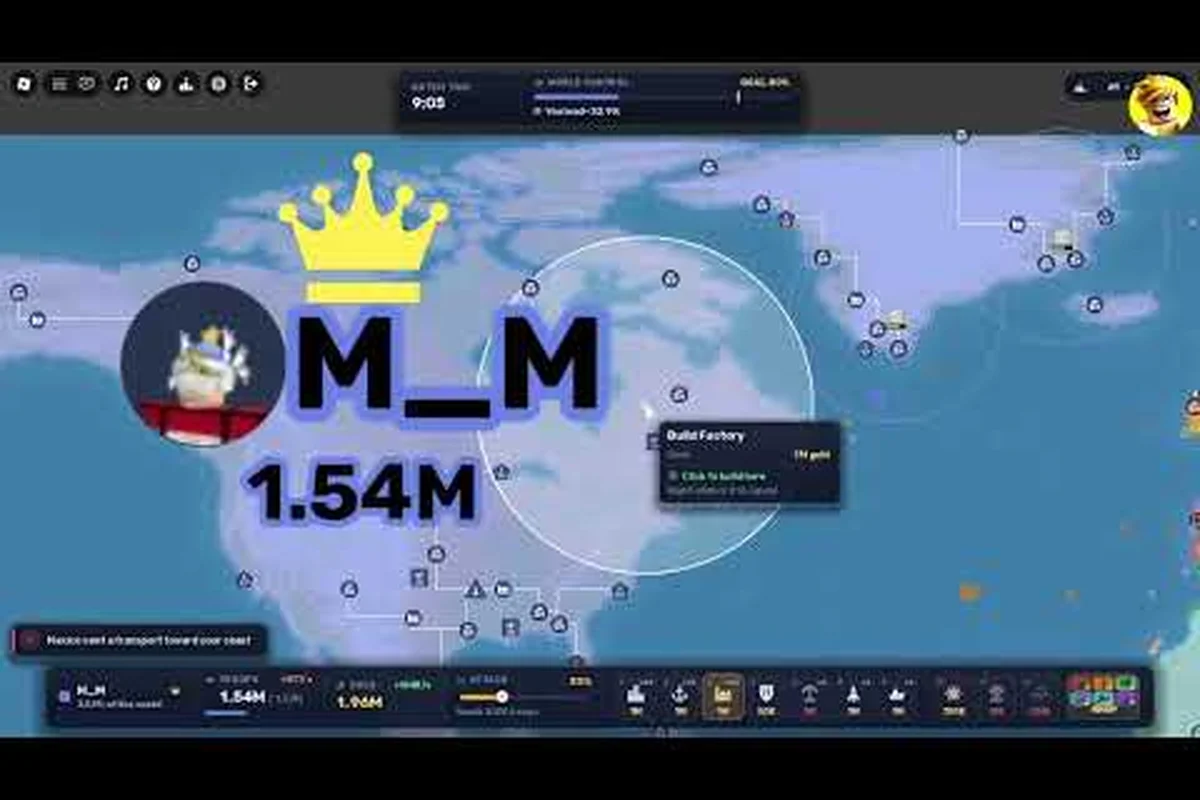
Choosing a nation in RoFront determines where your cities, armies, and economy begin, so the right starting point can shape your first hours on the shared world map. The official RoFront game page describes 88 player nations and hundreds of tribes, which means your opening choice should balance space, resources, and safe expansion rather than rely on appearance alone.
Why RoFront Nation Choice Matters
RoFront nation selection determines your initial position on a busy shared map. Every player begins with one nation, then expands through combat, city building, ports, factories, and alliances. Because the official game page lists 88 player nations and hundreds of tribes, the surrounding area can affect how quickly you find resources, build infrastructure, and recover from an early attack.
A strong start is not necessarily the nation with the highest military reputation. It is the one that gives you a workable combination of buildable land, economic access, and manageable pressure. This RoFront nation guide provides a repeatable process for comparing those factors before you commit.
The factors that shape a good opening
| Factor | What to inspect | Why it matters early |
|---|---|---|
| Starting land | Coastline, buildable area, nearby cities | Determines room for cities, factories, and defensive infrastructure |
| Resource access | Distance to resource-rich territory | Reduces early travel time and transport pressure |
| Neighbor pressure | Nearby active players and tribes | Influences whether you can expand without constant interruption |
| Strategic position | Ports, chokepoints, central routes | Can improve trade, movement, and long-term defense |
| Reputation | Difficulty of nearby opponents | Helps estimate the risk of an early raid or contested border |
The 88-nation shared world means no single choice is guaranteed to be ideal. The server population, neighboring activity, and current balance can change, so treat community recommendations as a starting point rather than a fixed tier list. Player experience and community reports are useful when evaluating recurring strategic patterns, although they may lag behind recent updates.
RoFront every nation explained through map context
The official page credits the map to Open Front and states that conquering 80% of the world is the victory condition. It also reports rapidly changing activity figures, including more than 43.6 million total visits and roughly 20,800 concurrent players on the page snapshot verified October 25, 2026. These figures describe the platform listing rather than a balanced measurement of every server, so they demonstrate a large audience without proving that one nation is always superior.
Because the map contains many nations rather than a short list of classes, the most useful explanation is positional. Compare each option through three lenses: where you begin, what you can reach, and who can reach you. That approach remains understandable even if starting nations change over time.
A RoFront Nation Selection Guide Based on Position
This RoFront nation selection guide turns a large roster into a manageable comparison. Start with the map, not a tier ranking. Identify the land and resources around your chosen nation, then examine how those features could support an economy before a large army becomes necessary.
The official listing says players expand from one nation by attacking neighbors and developing cities, ports, and factories. Those features imply a practical order: secure enough land for basic infrastructure, establish a resource loop, and only then spend heavily on military expansion. A nation with poor land but excellent long-term position can still be a valid choice if its early pressure is manageable.
Comparing the first minute of a match
| Observation | Strong signal | Warning sign |
|---|---|---|
| Open land | Several clear build areas | Almost every route is boxed in |
| Resource routes | Resources are close or reachable | Major trips cross dangerous territory |
| Neighbor activity | Opponents are active but not surrounding you | Multiple hostile groups are equally close |
| Coastal value | A port can support transport or trade | Coastline offers no practical route |
| Resource mix | Supports construction and military growth | Requires several long, exposed journeys |
Look for the practical resource triangle: land for buildings, nearby materials for construction, and a route that remains usable when other players expand. You do not need perfect coverage, but you should understand which side of your territory provides construction capacity and which side can become a defensible production zone.
If you want a broader catalog before comparing the map, the complete RoFront nations overview can help you identify the official roster. The next step is to assess the starting nations individually rather than treating every option as equally safe.
Evaluating RoFront Starting Nations by Risk
The safest opening is not always the nation farthest from conflict. A remote location can lack resources, while a central location can offer strong growth but attract immediate attention. The best RoFront nation pick guide balances safety and opportunity instead of optimizing only one of them.
Community discussion on the r/Roonby beginner thread emphasizes economy, troop training, and territorial expansion as connected early priorities. That player-reported advice supports a measured approach: observe the map, establish production, and avoid a large fight before your infrastructure can support one.
Risk categories for your first choice
| Risk profile | Best fit | Advantages | Main drawback |
|---|---|---|---|
| Low-exposure start | Cautious builders and new players | More time to learn economy and city placement | Fewer immediate targets for expansion |
| Balanced start | Generalists | Useful resources and several viable routes | Requires active border management |
| High-pressure start | Experienced players with clear plans | Rich access and fast contact with opponents | A delayed economy can be punished quickly |
Use this three-category read to narrow the roster. If you are learning combat, economy, and city placement simultaneously, a low-exposure area is often easier to manage. If you already understand the basics and can secure resources quickly, a higher-pressure position may reward initiative with better routes and richer territory.
Spotting an early trap
The most dangerous setup is not simply a powerful neighbor; it is a powerful neighbor positioned between you and the resources your economy needs. A second warning sign is a narrow coastline with no viable inland route, especially when enemy players can reach your intended expansion corridor from several directions.
Look at the first expansion ring around your nation. Identify where you could place the next city, where your production units could travel, and which hostile player could intercept that plan. If every option forces you through one crowded corridor, choose a different start or prepare defensive plans immediately.
A detailed comparison of geographic strengths can be found in the RoFront nation advantages and continent guide, but treat that reference as a scouting tool rather than a verdict. Compare starting position, resource access, coastline exposure, and expansion space for each candidate nation, then check the live map for neighboring players, chokepoints, and available settlement sites. Your own map check should remain the final authority, since current player positions and territorial control can change which opening is safest.
Choosing a Nation for Different Player Goals
Different goals make different RoFront starting nations sensible. A strong RoFront nation guide should not declare one universal winner, because a builder, fighter, and expansionist can all succeed from different positions. Your opening position, preferred combat style, and desired expansion route determine which advantages matter most; for example, a territorial nation with strong border defense may suit a defensive player better than a mobile nation designed for rapid expansion.
A player who enjoys planning cities and industrial growth should favor room, materials, and safe production. A player who wants immediate action should seek natural chokepoints and reachable opponents. A trader or alliance-minded player may value ports and central routes even if that location is more exposed.
Match the location to your strategy
| Player goal | Prioritize | Avoid | Opening plan |
|---|---|---|---|
| Build a large economy | Buildable land and resources | Isolated resource trips | Secure factories and protect production |
| Fight early | Reachable opponents and routes | A trapped or barren start | Build a small force, then claim a border |
| Expand steadily | Multiple expansion corridors | One-enemy choke points | Claim one secure neighboring area first |
| Trade or coordinate | Ports and central routes | Isolation from useful partners | Build connections before committing to war |
| Learn the game | Lower immediate pressure | Constant border threats | Map the area and automate basic production |
The role-first approach makes abstract reputation irrelevant. Two nations with similar military standings can play completely differently if one has room for several cities and the other has only one safe corridor. For example, a nation with three viable expansion corridors can support a steady economy, build a small force at a shared border, and secure a second settlement, while a one-corridor nation may need to prioritize one early attack before its production is pressured. Judge the starting position by reachable buildable land, city slots, border access, and route safety—not by a headline ranking alone.
If you are still deciding, the RoFront multiplayer and basic controls guide can help you evaluate how much time you will spend moving, fighting, and managing cities. Fast action is not automatically the best beginning if you prefer to plan a larger economy before entering a territorial fight.
How to Pick Your Starting Nation
This practical selection process takes only a few minutes and prevents a common mistake: choosing a visually appealing nation without checking its strategic surroundings. Use a phone or note to record each contender, because a short comparison is more reliable than a vague impression.
Seven steps before locking your choice
-
Open the shared map and locate every nation that interests you.
-
Inspect immediate borders, counting visible neighbors, tribal areas, and likely attack routes.
-
Trace resource access, estimating how far production units must travel for construction materials.
-
Check buildable land, looking for space that can support cities and factories without crossing another player’s territory.
-
Assess port value, since coastal access may help transport, expansion, or trade, although its practical effect can vary by current game systems.
-
Compare map pressure, distinguishing one nearby opponent from several enemies surrounding the same corridor.
-
Choose a recoverable start, favoring a location where you can defend one border while developing the other.
| Score | 1 point | 2 points | 3 points |
|---|---|---|---|
| Buildable space | Tight | Usable | Generous |
| Resource access | Distant | Mixed | Nearby |
| Border safety | Surrounded | One concern | Few immediate threats |
| Expansion routes | One corridor | Two options | Several directions |
| Port relevance | Minimal | Possible | Clearly useful |
| Learning fit | Too chaotic | Manageable | Matches your goal |
A score of 14 or more indicates a strong match under these criteria, although the total does not replace judgment. If two options differ by only one or two points, use your preferred strategy to break the tie. A fighter may accept more border risk, while a builder may value room over immediate targets.
Test the first economic plan
Before committing, imagine where your first city, second city, and first major resource route would go. If the plan requires crossing hostile territory immediately, either find another opening or build defenses first. If the plan can proceed through friendly or empty space, your economy may become functional before opponents force a large engagement.
Community reports often emphasize early efficiency because small production advantages compound. Treat that as player experience rather than a guaranteed rule, since the live map and active server can alter the best route. The nation expansion strategy overview provides a useful follow-up for turning a good position into territory.
Common Mistakes in RoFront Which Nation to Pick Decisions
A weak choice is usually made from incomplete information. Players may favor a prestigious nation, follow a single recommendation, or assume that distance equals safety. Instead, compare starting nations by their opening geography: a coastal nation with ports can protect trade and support expansion, while a landlocked nation may offer stronger resource access but no immediate sea route. Check nearby cities, resource nodes, border pressure, and the distance to your first target before committing, because those local conditions determine whether the opening is defensible and economically useful.
The most consequential mistake is expanding before securing production. Cities, ports, and factories are the foundation of the broader real-time conquest loop described on the official game page. Fighting with an economy that cannot replace losses can turn a favorable border into a losing campaign.
Correct weak assumptions early
| Weak assumption | Better check | Practical correction |
|---|---|---|
| A famous nation is automatically strongest | Local terrain and neighbors | Choose for opportunity in this match |
| More distance always means more safety | Distance from resources and routes | Weigh travel time against exposure |
| Every active neighbor is hostile | Current movement and borders | Observe before committing to war |
| Ports matter only for combat | Route and production potential | Use coastline for a defined economic plan |
| One community vote settles the choice | Several recent player reports | Compare recurring reasons, not conclusions |
Community advice can be outdated because RoFront launched in September 2026 and the official listing was updated October 24, 2026, only about a month before this guide’s verification date. Rapid iteration makes current map checks more reliable than a static recommendation. That is also why the tables here avoid assigning unsupported win rates or exact resource values to individual nations.
Final Nation Decision Before Your First Conquest
The best answer to the question of which nation to pick is the one that supports your first 20 minutes of play: enough land to build, reachable resources, a viable expansion corridor, and enough safety to learn the economy. Evaluate the live map, compare several candidates with the same criteria, and select the one that matches your preferred pace.
Your nation is a starting condition, not a permanent identity. Strong players can adapt through diplomacy, defense, and smart border choices, while poor positioning can be overcome with careful play. Treat community rankings as clues, verify the current server, and prioritize room and resources when the choice is close.
Frequently Asked Questions
What is the easiest nation for beginners in RoFront?
The easiest starting nation is usually one with generous buildable land, nearby resources, and few immediate attack routes. There is no permanent beginner tier because server activity and neighboring players change. A quiet map location can still be poor if it forces long resource journeys or offers no room for cities and factories.
Can I change my nation later in RoFront?
Do not count on an immediate full restart after joining a server. The practical approach is to treat the chosen nation as the foundation of your strategy and build toward stronger borders rather than assuming a quick swap will improve your position. If the opening becomes untenable, focus on defense, diplomacy, and surviving until a better expansion route opens.
Should a new player choose a coastal or inland nation?
Choose the one with better resources and safer routes, regardless of coastline. Coastal territory can offer port and transport value, but an inland position may be easier to defend. An inland nation with poor access is less attractive than a coastal one with a workable economy and room to grow.
Is the most powerful nation always the best choice?
No. Reputation does not replace local analysis. A nation may have a strong military identity but sit beside crowded territory, while a quieter start can provide room for factories, cities, and careful expansion. Evaluate current neighbors, resources, buildable space, and your own strategy before choosing.
How many RoFront starting nations should I compare?
Compare three to five candidates instead of choosing the first one that looks appealing. Use the same checklist for land, resources, border pressure, expansion routes, and port relevance. Narrowing the field this way makes your decision clearer and helps you identify which geographic advantages actually support your intended playstyle.