
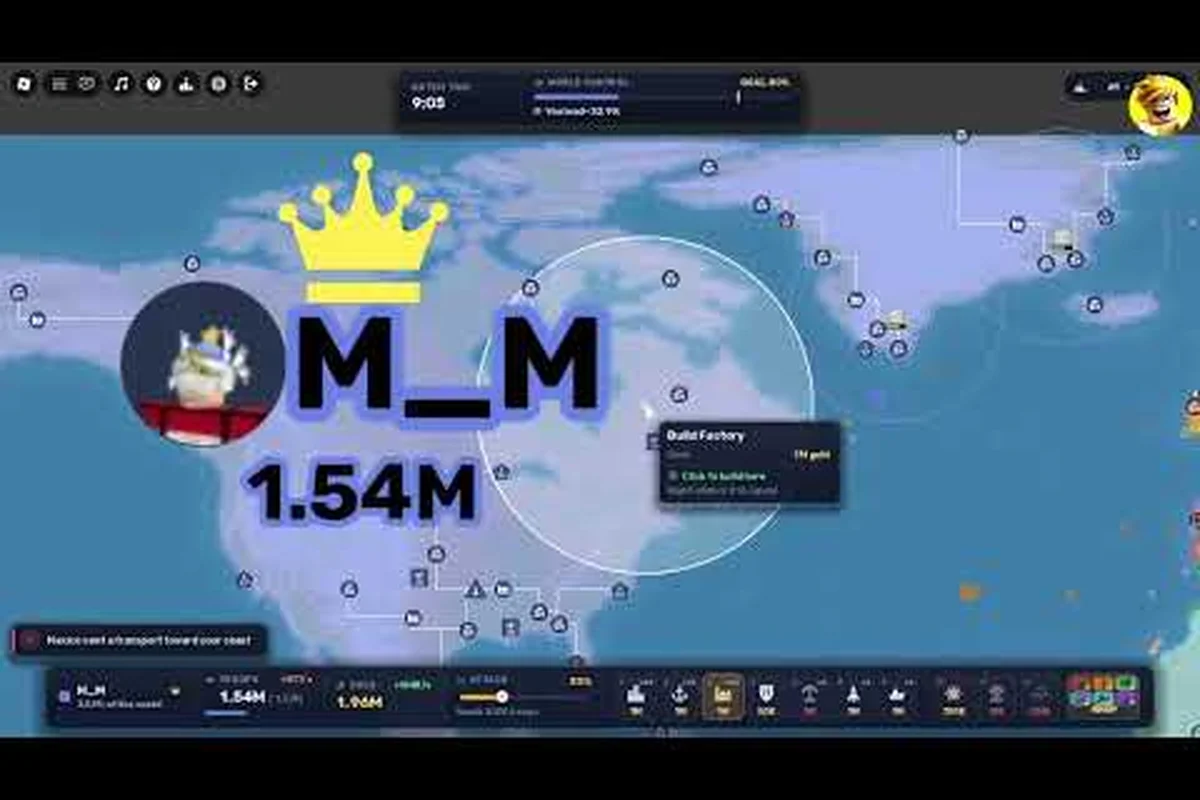
RoFront what's new in RoFront matters because its first month brought rapid iteration, new features, and balance shifts. This launch recap tracks the changes from September 26 through October 24 and explains how they affect strategy.
The RoFront page on Roblox shows the clearest public timeline: the experience began on September 26, 2026 and was last updated on October 24. Because RoFront does not publish a complete public changelog, this recap separates page-verified facts from community observations rather than presenting uncertain numbers as confirmed values.
RoFront Update History From Launch Through October 24
RoFront update history is unusually compressed. The official page records a September 26 creation date and an October 24 update, placing the latest recorded build within one month of launch. That short span helps explain why community advice can become outdated quickly: a strategy that worked during the opening days may no longer be optimal after successive balance passes.
| Date | Verified public signal | What it means for players |
|---|---|---|
| September 26, 2026 | Official game page created | Public launch establishes the baseline experience |
| September–October 2026 | Community discussions on territory, economy, troops, and PvP | Players test which launch systems reward steady development |
| October 24, 2026 | Official page last updated | Latest recorded build before the October 25 verification date |
| October 25, 2026 | Page snapshot checked | 43.6M+ total visits, 52.9K favorites, and about 20.8K concurrent players |
The population figures above came from the official page snapshot verified on October 25. They indicate strong interest, although visit totals and concurrent users should not be treated as proof that any single balance change is balanced for every play style. The 43.6M+ visit figure and 52.9K favorites describe reach; the approximately 20.8K concurrent players offer the better snapshot of active participation at that moment.
RoFront all updates cannot be reconstructed from one official post because the game lacks a public patch-notes archive. Instead, the best approach is to combine the page timeline, official engagement data, and community reports. For a broader record of dates and release context, the RoFront launch and release timeline provides useful background without treating community guesses as developer-confirmed changes.
Reading Community Reports Responsibly
Community information remains valuable during rapid development because players notice practical consequences quickly. A player may report that an early rush feels weaker, that territory becomes harder to stabilize, or that a troop composition performs differently under current matchmaking. Those observations can identify a system worth testing, but they do not establish the exact underlying values.
The beginner discussion on Reddit confirms the core loop that players were evaluating: territory control, economic growth, troop training, and competition with other nations. Because the thread may predate later October changes, it should be used for general strategy rather than exact balance claims. A reliable report should identify the date, build context, match conditions, and observed result whenever possible.
| Evidence type | Confidence | Best use | Main limitation |
|---|---|---|---|
| Official game-page dates | High | Confirm launch and last-update timing | Does not list every modified value |
| Page population snapshot | High for that moment | Measure visibility and activity | Not a balance or win-rate metric |
| Community match reports | Medium | Identify strategies worth retesting | Often omit version and exact values |
| Video demonstrations | Medium | Show practical behavior and interfaces | May become outdated after tuning |
This evidence hierarchy matters because precise troop, nuke, or economy values are not publicly documented in the supplied material. A responsible RoFront what changed in RoFront review should say when a number is unverified, not fill gaps with invented specifications.
What Changed in RoFront’s First Month?
What changed in RoFront during its opening month cannot be reduced to one patch, because the official timeline records continuous development without a public itemized changelog. The practical evidence points to three broad areas: stronger competition around territory, ongoing balance adjustments, and a growing player base that changes match dynamics.
Territory Control and Economic Pressure
Territory remains the strategic center of the game. According to the community beginner material, players control territories, build an economy, train troops, and fight other nations to dominate the map. The likely strategic effect of a larger population is not simply more competition; it is less predictable timing. Rivals may appear sooner, while well-defended regions become more valuable as players seek efficient expansion.
The central question is whether you can convert temporary control into a stable economy. Attacking without protecting key land may increase your troop count while exposing your base, and economic growth without defense may let a stronger opponent take over. A durable approach therefore alternates between income, fortification, and counterattack rather than treating land capture as the only measure of progress.
| Priority | Player objective | Practical reason |
|---|---|---|
| Economy | Produce consistent resources | Supports troop training and future expansion |
| Territory | Control useful regions | Creates space, income, and strategic depth |
| Troops | Maintain a balanced force | Creates protection without committing every resource |
| Defense | Stabilize vulnerable borders | Reduces losses during rival counterattacks |
| Expansion | Select high-value targets | Prevents the army from spreading too thin |
Community experience suggests that territory value depends on position and stability, not just the number of tiles held. A compact, defensible cluster can be easier to manage than several disconnected holdings, although exact scoring and resource output are not officially confirmed in the available data.
Troop Training and Matchup Choices
Troop training is still a central decision, but the most useful update information comes from testing how units perform under current player behavior. Videos published by community creators, such as the CHALLS RoFront strategy guide, can reveal practical attack patterns, though any recommendation should be retested after a balance update.
Rather than calling one composition universally best, compare roles. A balanced army may support defense, while a concentrated force can punish a weak border. The right choice depends on what the opposing nation commits, how much income you have, and whether your territory can survive while your army moves. This makes troop training an adaptive decision rather than a static tier-list problem.
Population and Match Density
The verified snapshot of approximately 20.8K concurrent players and a 55-player server cap suggests meaningful population, although the available source does not establish average queue size or regional matchmaking behavior. More players can mean more opportunities to test matchups, but it can also mean faster counterattacks against a player who expands without scouting.
Community reports should therefore be filtered for population effects. A strategy that succeeds during quiet periods may fail when more nations act at once. A guide written during launch week may not reflect the pressure of a more populated month, especially if defenders now respond to common openings faster than they did at launch.
RoFront Update News and Player-Facing Changes
RoFront update news currently points to rapid delivery rather than long, formal patch cycles. The official page’s October 24 update date is the strongest public confirmation that the game was still receiving changes one month after launch. The latest RoFront update overview provides focused detail on this most recent activity and separates it from earlier milestones.
What the Official Page Confirms
The page confirms three especially useful facts: RoFront launched on September 26, received a later update on October 24, and had a large audience by October 25. It also reports 52.9K favorites, indicating that many players saved the experience for future sessions. The visit and favorite counts may change after the recorded snapshot, so they should always be dated when quoted.
| Official signal | Snapshot value | Practical interpretation |
|---|---|---|
| Total visits | 43.6M+ | Broad exposure across the opening month |
| Favorites | 52.9K | Substantial interest in returning later |
| Players online | About 20.8K | Active audience at verification time |
| Server capacity | Up to 55 players | Matches may create meaningful competition |
| Last update | October 24, 2026 | Most recent confirmed build before verification |
These numbers do not reveal exact patch content, and they should not be used to infer revenue, win rates, or player satisfaction. Their value is comparative: they establish that RoFront reached a large audience quickly, making early launch advice less reliable as competitors adapt.
Features That Need Direct Verification
RoFront update announcements should be treated as confirmed only when they appear in an official game post, announcement, notice, or dated page event. Without a public changelog, a player should not claim that a menu, unit, map feature, or economy rule was newly added merely because it was not visible during launch.
| Claim type | Verification standard | Safe wording |
|---|---|---|
| New feature | Dated official announcement or game-page event | “The developer announced…” |
| Balance adjustment | Reproducible before-and-after comparison | “Community testing reports a shift…” |
| Rebalance | Multiple consistent reports plus version context | “Players report that…” |
| Bug fix | Official notice or repeated corroboration | “The change appears to address…” |
| Minor interface change | Direct observation in the current build | “The current interface shows…” |
The complete RoFront update history is especially helpful for preserving dates, while this article focuses on the significance of the launch window. Together they reduce the chance of confusing an older guide with the current build.
RoFront Update Announcements: How to Track Changes
RoFront how to get update news is best answered with a layered system because the game does not maintain a traditional, centralized patch-notes page. Check the official game page first, then watch the official game’s announcements and community discussions, and finally compare your own results across builds.
A Practical Three-Layer Check
Start with the official page’s update timestamp. If it changes, assume something may have changed, but do not guess the exact effect. Next, look for a dated official announcement. If none appears, use community reports only to form a test plan. Finally, reproduce the reported situation in a controlled match and record what you observe.
| Layer | Check | What to record |
|---|---|---|
| Official | Game page and announcements | Date, headline, stated feature or fix |
| Community | Forums, Reddit, creator videos | Build context, claim, matchup, result |
| Personal | Two controlled test matches | Setup, outcome, whether behavior repeated |
This method is more reliable than scrolling through general strategy channels. A helpful community report should distinguish “the nuke count changed” from “the nuke felt less effective,” because the first is a value claim and the second is a balance impression. Exact numbers require a visible counter, a repeatable setup, and preferably confirmation from multiple sources.
Comparing Two Builds Fairly
A fair comparison changes one variable at a time. Keep the same nation type, army composition, territory, and opponent behavior when possible. If matchmaking is too unpredictable, use repeated matches and record averages rather than selecting a single impressive result.
| Test | Keep constant | Change | Useful result |
|---|---|---|---|
| Opening economy | Nation and map behavior | One economy choice | Resources at the same time mark |
| Troop matchup | Army role and territory | One unit ratio | Survival and map-control trend |
| Defense | Territory layout | One defensive priority | Losses after equal attacks |
| Expansion | Army strength | Target selection | Cost and recovery time |
Players should also note the date of the match because community advice can become stale within days. A report from September 27 may be excellent history but weak evidence for the October 24 build. Updating old conclusions is part of understanding the game, not a sign that the original test was wrong.
Strategic Shifts Caused by Rapid Updates
The most important RoFront update announcements may not be individual balance changes; they may reflect how quickly strategies decay. A new player can copy a successful attack route, but established opponents will learn from the same community discussions. The durable advantage comes from understanding the underlying decision rather than memorizing one opening.
Early Game
The early game should prioritize a dependable economy and a defensible territory cluster. Large expansion is risky when opponents can punish an extended troop train, while excessive caution allows stronger rivals to set the pace. The best early plan is the one that can recover after one failed attack without losing the entire economy.
| Early-game state | Better response | Avoid |
|---|---|---|
| Weak economy | Stabilize income and improve defenses | Immediate large troop purchase |
| Exposed territory | Consolidate nearby holdings | Chasing distant regions |
| Unscouted opponent | Gather information before committing | Assuming a fixed opening |
| Small but stable army | Protect the core and wait for value | Feeding a full-strength defender |
Midgame and Expansion
The midgame becomes a test of conversion: can the player turn economic advantage into territorial control without overextending? Army size matters, but a larger force also costs more to replace. Community reports that emphasize attack direction without resource cost are incomplete, so compare the short-term gain with the resources required to hold the result.
| Strategic goal | Decision question | Better indicator |
|---|---|---|
| Take a neighboring region | Can defenders rebuild before I capture it? | Defender recovery time |
| Expand toward a rival | Can I protect two fronts? | Border pressure |
| Build an army | Does this composition block common counters? | Losses in equal matchups |
| Hold territory | Is the land worth the defense cost? | Net strategic value |
Late Game
Late-game decisions depend on information quality. If the opponent’s army and economy are unknown, a cautious posture may preserve options, but constant delay can surrender initiative. Use the test framework in the RoFront first-priority strategy guide to identify whether your current objective is economy, defense, training, or expansion.
Rapid updates also change the value of saved match recordings. A video can reveal positioning and decision-making, but unit values or rules may have changed since capture. Note the upload date and compare the same situation in the current build before drawing a firm conclusion.
What the Latest RoFront Update Means for Players
The latest public update means RoFront is in an active tuning phase rather than a finished, locked ruleset. Players should expect popular strategies to change, especially in territory contests and troop matchups. The most useful update summary is not a long list of guessed values; it is a clear distinction between confirmed launch facts, reported adjustments, and changes each player can verify directly.
| Summary area | Confirmed evidence | Responsible conclusion |
|---|---|---|
| Launch | Official page created September 26 | The official history begins in late September 2026 |
| Latest build | Official page updated October 24 | Changes arrived during the first month |
| Audience | 43.6M+ visits, 52.9K favorites | Interest is substantial at the verified snapshot |
| Balance | Community reports only in available evidence | Test claims; do not invent exact values |
| Strategy | Community guides and player experience | Retest old advice after each update |
These conclusions also explain why a single “best strategy” video can mislead. RoFront what changed in RoFront may involve small tuning shifts that barely change the basic loop, yet they still matter when millions of visits produce many competitors learning the same counters. A strong update recap should help players know what to verify without pretending the evidence is more precise than it is.
A Five-Minute Post-Update Routine
After a new build appears, spend five minutes checking the official announcement, then review community claims and identify the one mechanic most likely to affect your current strategy. Run a controlled test, record the result, and revise only the affected decision instead of abandoning an entire play style.
-
Record the update date so later tests have a clear version marker.
-
Separate value claims from impressions before reading community posts.
-
Select one test scenario that matches the reported change.
-
Keep the setup stable so the result is easier to interpret.
-
Write down what changed in your own plan and when you should retest it.
This routine turns vague RoFront update news into actionable information. It also helps you recognize when an old recommendation remains valid because the underlying mechanic did not move, even if other systems were adjusted.
Frequently Asked Questions
What is the latest RoFront update?
The latest confirmed public update was recorded on the official RoFront game page on October 24, 2026. RoFront does not provide a complete public changelog there, so the precise modified troop, nuke, or economy values are not officially available in the supplied evidence. Players should treat community claims as items to test rather than confirmed patch notes.
What changed in RoFront since its September 2026 launch?
RoFront changed through at least one documented page update after its September 26 launch, alongside community-observed shifts in territory pressure, troop matchups, and strategic pacing. Because detailed patch notes are not public, no exact stat changes can be confirmed here. The safest way to identify what changed is to compare controlled matches after each dated build.
Where can I find RoFront update announcements?
The best starting point is the official RoFront game page, where the public timeline records the September 26 creation and October 24 update. Check dated notices and announcements there, then use community channels only for additional context. Because announcements may be brief, recording the date and the observed effect helps when comparing older guides with the current build.
How do I know which community RoFront update reports are reliable?
A report becomes more useful when it includes the date, current build context, controlled setup, and a repeatable outcome. Exact numerical claims deserve more scrutiny than observations such as “attacks feel weaker.” Compare several reports, reproduce the scenario personally, and avoid treating a single viral clip or old September match as proof of a permanent balance change.
Does RoFront publish a complete list of all updates?
No complete public update list was available as of the October 25, 2026 verification date. The official page provides reliable launch and update timestamps, while community reports fill in some practical details without guaranteeing exact values. The most accurate approach is to preserve the official timeline, test reported changes personally, and revisit the recorded RoFront update history whenever a new dated build appears.